In search of the Spiciest Spicy. Part 2
In our last article, we traveled back in time to the 15th century, when the Portuguese, in search of the valuable black pepper, ended up finding something even fierier — the chili pepper. We discovered how this plant set the map ablaze, crossing oceans and continents with the help of the Portuguese caravel, conquering kitchens, palates, and cultures.
But the story of spice didn't stop there.
After four centuries of conquests, trade, and increasingly fiery dishes, the 20th century brought a new era: that of the science of spice.
The 20th century and the man who wanted to measure hell
Enter Wilbur Scoville, an American pharmacist and author of the work The Art of Compounding, published in 1895. The book was a benchmark in pharmacopeia for decades, but that was not what secured his eternal place among heat seekers.

Image of Wilbur Scoville (c. 1910). Source: Wikimedia Commons. Public Domain.
In 1912, Scoville created something revolutionary: the Scoville Organoleptic Test, a way to measure the intensity of the heat felt in the mouth.
The idea was simple but ingenious: dilute a solution with chili pepper extract in sugar water until the heat was no longer perceptible to the palate. The number of dilutions required defined the unit of spiciness. Thus was born the legendary scale: SHU – Scoville Heat Units.
From tongue to laboratory
In the beginning, the test was performed by trained human tasters.
But as you can imagine, tasting chili pepper day in and day out has consequences. So-called taster fatigue made the results inaccurate and inconsistent. It wasn't just the tongue that was burning — the reliability was, too.
Today, science does the job more reliably (and less painfully) using high-performance liquid chromatography, which isolates and measures the chemical components responsible for pungency: capsaicinoids.
What does spice do to the body?
The main culprit for the fire in your mouth has a name: capsaicin.
This compound activates nerve receptors that normally detect excessive heat — it's as if you were drinking lava. The body interprets the pain as if it had been burned and reacts by releasing endorphins, the hormones that bring pleasure, well-being… and some addiction.
Yes, there are those who enjoy suffering. And those who, after the first tear, can't stop anymore.
Just like with wine, with time and practice, we begin to realize that not all chili peppers are the same. There are subtle variations in flavor, intensity, duration, and even the location of the burn. The palate is educated. The addiction grows.
The race for the world's hottest pepper
With the scale created, the competition was on.
And the world didn't take long to enter a true race to hell.
-
2007 – Bhut Jolokia (Ghost Pepper):
Coming from India, it was the first to cross the million mark. With 1,041,427 SHU, this chili entered the books and paved the way for the fiery madness that would follow. -
2010 – Naga Viper:
A diabolical crossbreed from the United Kingdom, which climbed up to 1,382,118 SHU. A lethal mixture with genes from the Bhut Jolokia and other tropical beasts. -
2013 – Trinidad Moruga Scorpion:
Straight from Trinidad and Tobago, with a shape like a scorpion ready to strike and a matching burn: 2,009,231 SHU. Only for the brave — or the reckless. -
2017 – Carolina Reaper:
Created by Ed Currie in the USA, it boasted the color of hell and the name of death. With peaks of 2,200,000 SHU, it was for years the most feared chili on the planet. And with good reason. -
2023 – Pepper X:
Just when we thought hell had its limits… appeared the hottest chili ever grown, also the work of Ed Currie. With an absurd 2,693,000 SHU, Pepper X dethroned the Reaper and was officially recognized by Guinness as the new world champion. - Today – Producers continue to crossbreed chili varieties, looking to break records, creating new spicy aberrations with names that seem straight out of horror movies.
And yes, some of them are stronger than pepper sprays used by the police.
The world was never the same
Spiciness is no longer just about flavor. It is culture, a challenge, science, and an addiction.
The 20th century gave us the metric. The 21st century gave us the gladiators of heat.
Today, the chili pepper is not just an ingredient — it is a test of courage, a symbol of identity, an obsession.
And us?
We're still here, always in search of the hottest spice.
In the next article…
Prepare yourself for the definitive list of the hottest chilies on the planet — with names, descriptions, origins, SHU rankings, and burning curiosities. Literally.
Until then, we only have one question for you:
Do you dare?
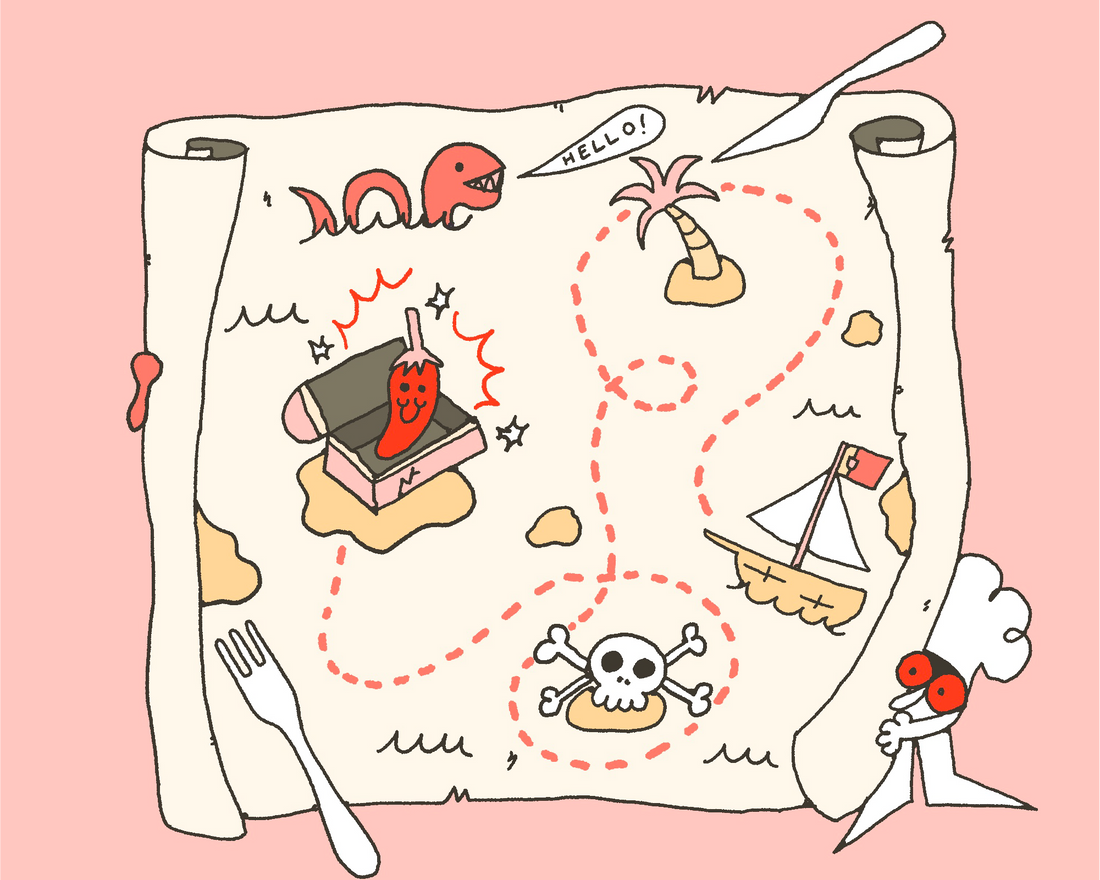
Illustration by Nick_Ohlo